Singapore’s artificial intelligence strategy is moving beyond software pilots and productivity tools, with a new wave of partnerships aimed at deploying AI in real-world environments — from robotics and public spaces to manufacturing, finance, healthcare and digital infrastructure.
At ATxSummit 2026, Singapore announced a series of collaborations involving global technology players including NVIDIA, OpenAI and Google, alongside local agencies such as IMDA, JTC and the Singapore Institute of Technology. The announcements signal a shift in emphasis: from exploring AI tools to building, testing and governing AI systems that can operate in practical, high-trust settings.
From generative AI to physical AI
One of the most significant announcements for industry is NVIDIA’s plan to launch an AI research lab in Singapore focused on embodied AI and efficient AI computing. According to Singapore’s Economic Development Board, the lab will support research with university researchers, industry partners and government agencies, and will focus on areas with potential applications in manufacturing.
Embodied AI refers to intelligent systems that can perceive, reason and act in the physical world. In manufacturing, this could eventually support smarter robots, adaptive automation, digital twins and systems that can respond more dynamically to factory-floor conditions.
The second focus area, efficient AI computing, is also important for industry. As AI models become larger and more widely deployed, the cost and energy requirements of running them become a practical constraint. EDB said the research will look at optimising models and infrastructure to reduce compute costs, improve energy efficiency and support scalable AI deployment.
For Singapore manufacturers, this matters because AI adoption is no longer just about adding chatbots or analytics dashboards. The next competitive frontier may involve using AI inside operational environments — where safety, reliability, latency, cost and integration with existing systems become critical.
Punggol Digital District as a real-world testbed
Singapore is also preparing to launch a physical AI testbed at Punggol Digital District later in 2026. IMDA, JTC and SIT will work with eight industry partners to research, test and deploy physical AI in a mixed-use public area. EDB described it as Singapore’s first testbed to enable multi-use-case and multi-operator deployments at scale in such an environment.
Initial companies involved include Certis, DHL, Grab and QuikBot, which will co-design and test robotics services such as food and parcel delivery, cleaning and security patrolling. The testbed will also examine safety, use cases, regulatory challenges and infrastructure requirements.
While these deployments are not factory-specific, they are relevant to manufacturing because they deal with the same hard problems: how robots navigate shared spaces, how AI systems behave under real-world conditions, how operators validate safety, and how regulation keeps pace with automation.
OpenAI deepens Singapore presence
The announcements also include OpenAI for Singapore, a partnership with the Ministry of Digital Development and Information to support Singapore’s National AI Strategy. OpenAI said the initiative is backed by a commitment of more than S$300 million and will focus on helping organisations deploy frontier AI, developing local AI talent, and widening access to AI tools across the economy.
At the centre of the partnership is OpenAI’s first Applied AI Lab outside the United States. OpenAI said it will create more than 200 Singapore-based technical roles over the next few years and make Singapore one of its global hubs for Forward-Deployed Engineers — teams that work directly with organisations on real-world deployment problems.
For businesses, the important point is not simply that another global AI company is setting up in Singapore. It is that Singapore is positioning itself as a place where AI is deployed into real operating environments, not just researched or discussed.
Trust and governance remain central
As AI moves into more sensitive and physical environments, governance becomes more important. Singapore is also exploring “nutrition labels” for AI-enabled applications, where service providers would disclose key information about an AI application’s capabilities and limitations in a clearer and more accessible way. MDDI said earlier this month that it is consulting relevant service providers on the concept.
Reuters reported that Singapore is in talks with technology companies on such labels, which could indicate the intended uses and limitations of AI products. Minister for Digital Development and Information Josephine Teo said the framework may begin on a voluntary basis before further steps are considered.
This governance layer could become increasingly relevant for businesses adopting AI in regulated or high-risk settings. For manufacturers, the question will not only be whether AI works, but whether it can be trusted, audited, explained and safely integrated into production systems.
Why it matters for Singapore industry
The broader direction is clear: Singapore wants to build an AI ecosystem that can support deployment at scale. That means attracting frontier AI companies, building local talent, creating testbeds, and developing assurance frameworks that give businesses confidence to adopt the technology.
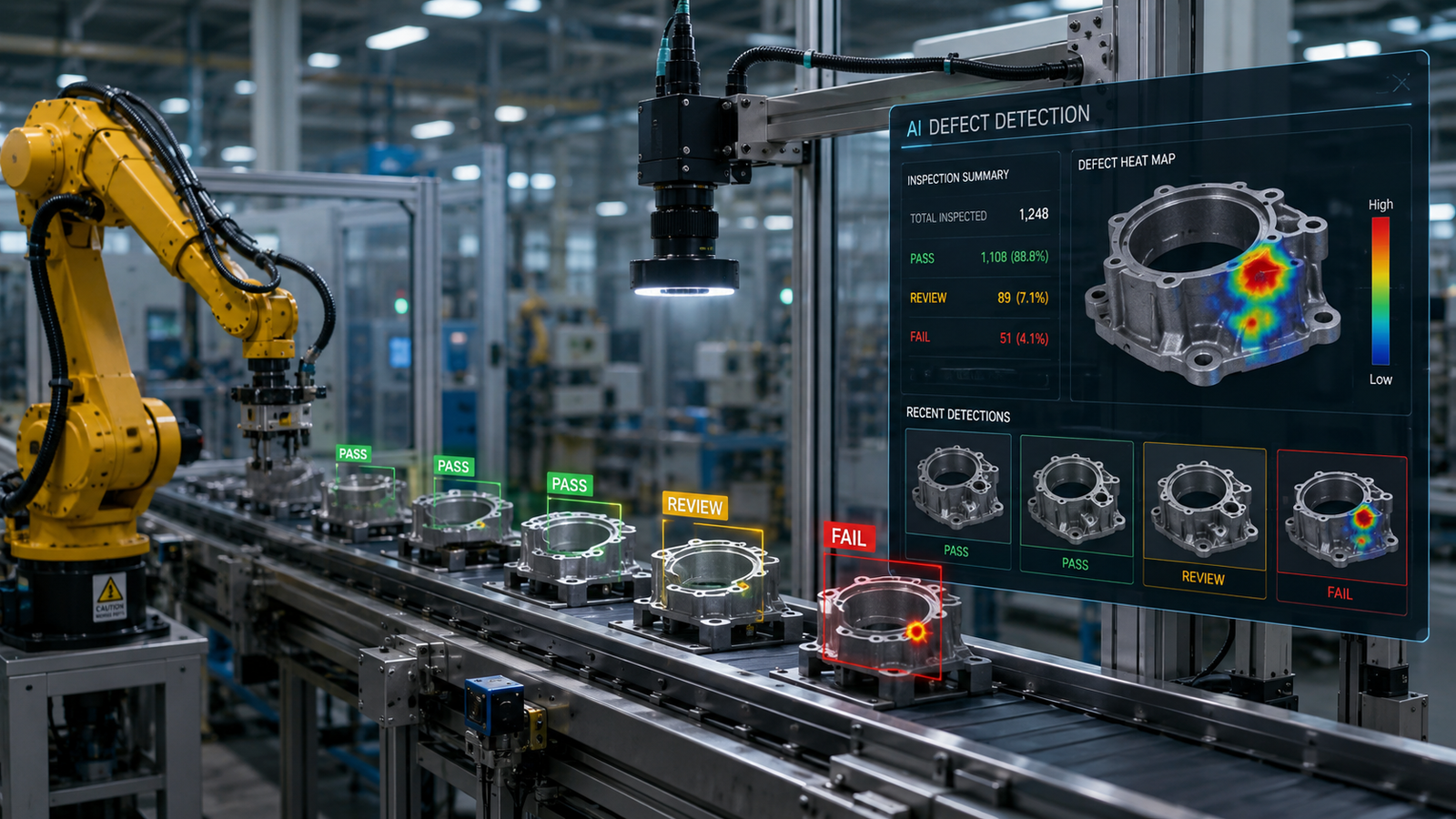
For manufacturing, the opportunity lies in connecting AI to real operational needs — predictive maintenance, quality inspection, robotics, production planning, simulation, energy optimisation and workforce augmentation.
But the challenge is equally clear. AI adoption in industry will require more than software access. Companies will need data readiness, systems integration, cybersecurity, worker training, governance processes and management confidence.
Singapore’s latest AI push suggests that the next phase of competition will not be won by those who merely experiment with AI, but by those who can deploy it safely, reliably and at scale.