When Apple warns that product price increases have become unavoidable, most people read it as a consumer technology story.
They ask whether the next iPhone or MacBook will cost more. They compare launch prices. They wonder whether to upgrade now or wait.
But for Singapore SMEs, the more important lesson is not about Apple products.
It is about how artificial intelligence is beginning to reshape the cost of physical technology — and why local manufacturers, engineers, and operators need to pay attention before the impact reaches their own supplier quotations.
The memory crisis is not a consumer story
In June 2026, Apple CEO Tim Cook told The Wall Street Journal that price increases on the company’s products are “unavoidable” as surging memory and storage chip costs make the situation “unsustainable.” He described it as a “hundred-year flood” that he had never seen in over 40 years in the industry. Research firm TechInsights has estimated that the cost of the upcoming iPhone 18 Pro may need to increase by around US$270 to maintain existing margins.
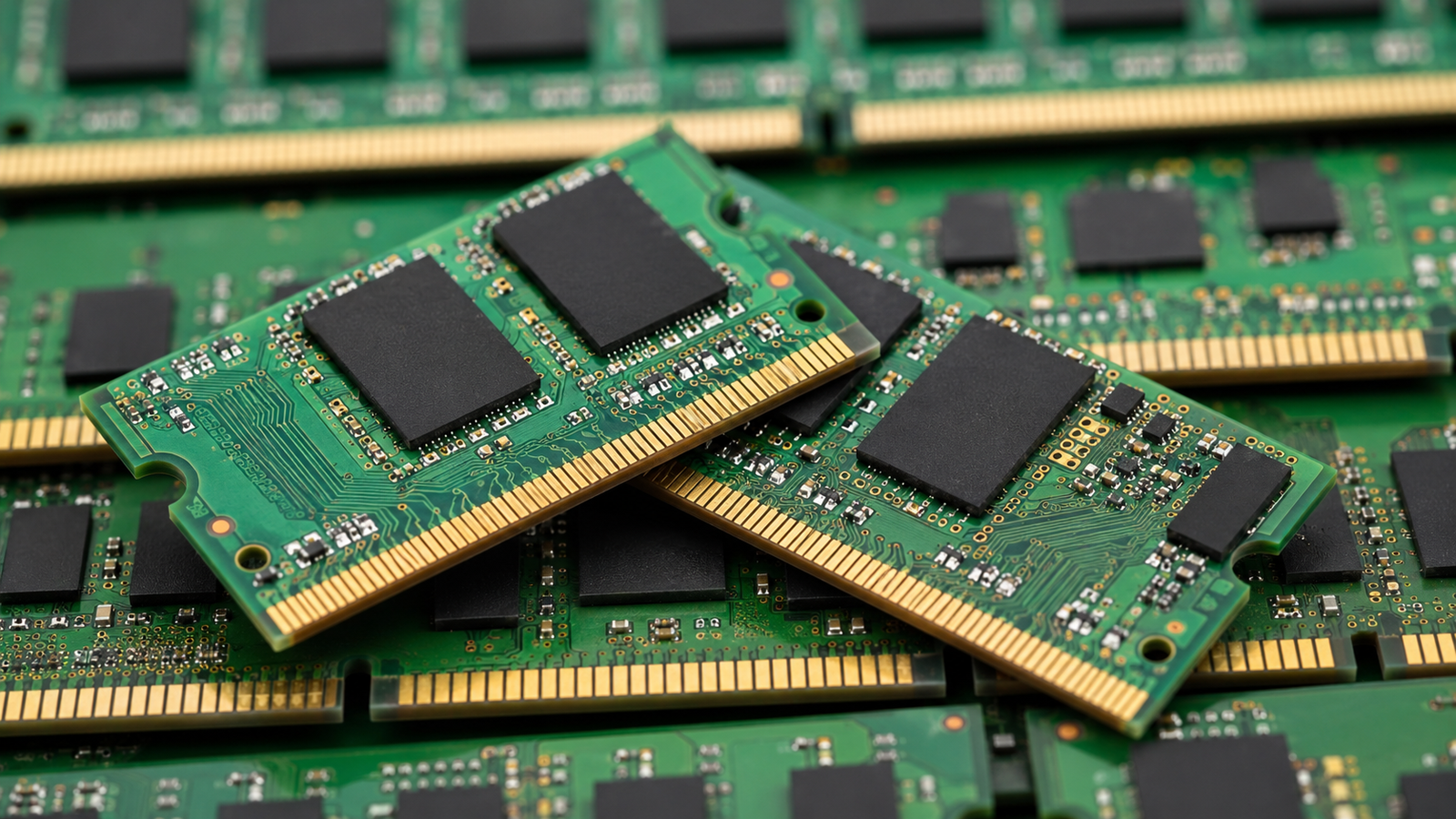
The pressure has a clear source. AI data centres are now consuming an estimated 70% of all memory chips produced worldwide, leaving smartphone makers, PC manufacturers, and industrial equipment suppliers competing over the remaining supply. Memory prices have more than doubled since October 2025.
This is not a typical cyclical shortage. IDC describes it as a potentially permanent, strategic reallocation of the world’s silicon wafer capacity. Samsung, SK Hynix, and Micron — who together control over 95% of global DRAM production — have systematically redirected manufacturing capacity toward high-bandwidth memory (HBM) for AI accelerators, because it commands far higher margins. Every wafer allocated to an HBM stack for an Nvidia GPU is a wafer denied to conventional DRAM and NAND used in consumer and industrial devices. IDC projects that DRAM and NAND supply growth in 2026 will both fall well below the 20–30% historical norms.
New fab capacity from Micron and SK Hynix will not reach volume production until 2027 at the earliest, meaning this is not a quarter or two of discomfort. It is a structural shift that will run through the planning cycles of most SMEs reading this.
"AI has turned memory from the cheapest part of the digital economy into one of its most contested resources." — Shawn Kim, Head of Technology Research, Morgan Stanley Europe and Asia
Why SMEs are not insulated
Apple has enormous purchasing power. It has long-term supplier relationships, deep cash reserves, and one of the most sophisticated supply chains in the world. If even Apple has been absorbing rising component costs for months before finally acknowledging that the ceiling has been hit, smaller companies should not assume they are better protected.
Memory and storage are not niche components. They sit inside laptops, tablets, servers, backup systems, network storage, CCTV systems, industrial PCs, machine vision systems, sensors, controllers, and automation equipment. PC manufacturers including Dell, HP, Lenovo, Acer, and ASUS have already raised prices by between 15% and 30%, and Apple has raised prices on select MacBook models by up to US$400.
The effect on SMEs will not always be obvious. A local business may not receive an invoice that says “AI-driven memory shortage.” Instead, the impact may appear as a higher laptop quote, a more expensive server replacement, a revised automation proposal, a shorter quotation validity period, or a longer wait for equipment.
This is how global cost pressure reaches local businesses — not through headlines, but through quotations.
Technology is now operational infrastructure
For many Singapore SMEs, technology has become part of operating capacity rather than a back-office expense.
A manufacturer may depend on inspection systems, barcode scanners, digital work instructions, industrial computers, and production data. A logistics company may depend on tracking systems, handheld devices, and cloud platforms. A precision engineering firm may depend on high-memory CAD workstations and large-capacity storage. A security integrator may depend on cameras, recorders, and storage-heavy monitoring systems.
When the cost of memory and storage rises structurally, all of these systems are affected.
For SMEs involved in manufacturing, engineering, medtech, food production, logistics, or automation, the issue goes further. Many do not only buy laptops and office devices. They buy equipment containing embedded electronics, memory, processors, storage, and sensors. A machine vision system may become more expensive. A data logger may have a longer lead time. An industrial PC may cost more than expected. An automation proposal may be revised because the components inside the system are no longer priced the same way as before.
The business may not see the chip market directly. But it will see the supplier’s quote.
The pricing discipline problem
There is also a pricing lesson here that many SMEs learn too late.
SMEs often absorb cost increases for too long because they fear losing customers. This is understandable, especially in a competitive market. But silent cost absorption can weaken a business quietly and cumulatively.
If hardware, software, storage, or equipment costs are rising, SMEs that sell technology-enabled services — system integrators, managed service providers, equipment suppliers, digital operations firms — need to review their pricing earlier than feels comfortable. The key is not to pass on every cost blindly. It is to explain value clearly. Customers are more likely to accept a price revision when they understand what is changing, why it matters, and what level of service or reliability is being maintained.
Singapore’s government has supported SME digitalisation through programmes like the Productivity Solutions Grant (PSG) and Enterprise Development Grant (EDG), and IMDA’s SMEs Go Digital programme has supported around 88,000 SMEs since 2017. These programmes can offset acquisition costs but do not insulate businesses from component price inflation in the secondary supply chain. SMEs should understand which of their technology investments fall within grant-supported categories and plan accordingly.
The uneven adoption risk
For Singapore, this topic has a particular dimension. The country benefits from semiconductor growth, advanced manufacturing, electronics, data centres, and the broader digital economy. But local SMEs also buy from the same global technology ecosystem, and they do not benefit from the purchasing power of hyperscalers.
The larger risk is that technology adoption becomes uneven. Larger firms may continue investing through the cost cycle, while smaller firms delay upgrades and fall further behind. If the cost of hardware rises too quickly, some SMEs may delay digitalisation projects, cut specifications, or avoid upgrading ageing systems — quietly weakening productivity at a time when labour costs are already elevated and competition requires continuous investment in capability.
That is a risk worth naming directly.
What SMEs should do now
This does not mean SMEs should rush to buy every device on hand. That would be the wrong lesson. The better response is discipline, not reaction.
Map the technology that keeps the business running. Identify which systems are mission-critical and which carry the most operational risk if they fail or need emergency replacement.
Audit your refresh cycle. Identify equipment and devices that may need replacement within the next 12 to 24 months. Waiting until equipment fails may turn a routine replacement into an expensive emergency purchase at a worse price point.
Ask your suppliers the right questions. Find out where price pressure is coming from, not just what the final number is. Ask whether quotation validity periods have shortened. Check whether project proposals include price escalation clauses.
Avoid over-specifying. If the business does not need top-specification hardware for a particular use case, do not buy it now and absorb the premium unnecessarily.
Consider standardisation. Standardising devices and systems can improve purchasing power, simplify maintenance, and reduce the cost and complexity of replacements over time.
Review customer pricing if hardware is part of service delivery. A company that installs systems, provides maintenance, runs digital operations, manages data, or supplies equipment cannot assume old pricing remains sustainable through a structural component cost shift.
None of these steps requires a large corporate procurement department. They require awareness and discipline — and acting before the pressure becomes visible in a quotation.