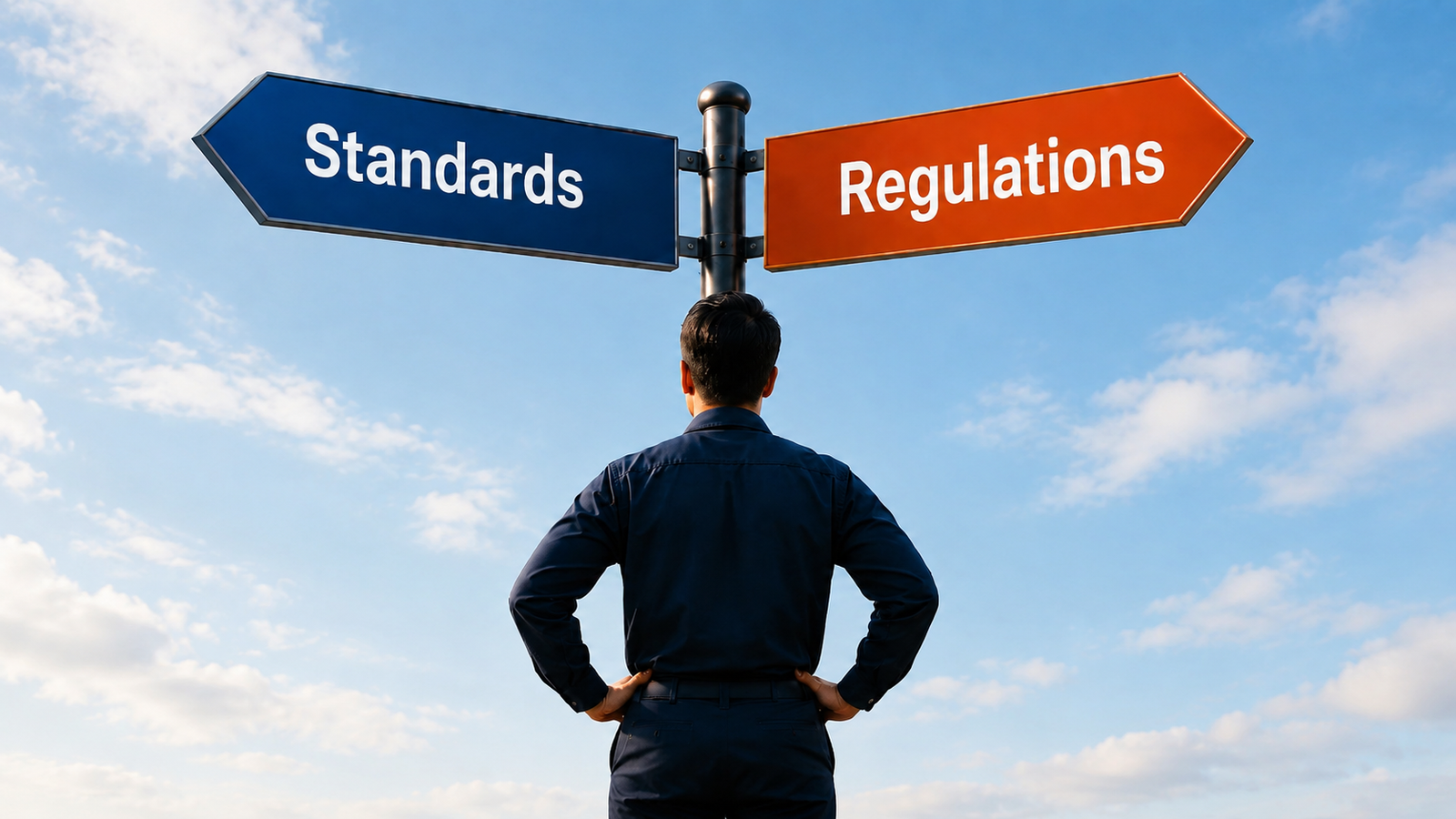
For Singapore’s SMEs, the distinction between a standard and a regulation is more than semantic. It is a strategic blind spot that costs real business.
The difference that matters
A standard is an agreed way of doing something well — how a product should be tested, how a process should be managed, how systems should work together. Developed through consensus among industry experts and standards bodies, standards are generally voluntary in principle.
A regulation is what the law requires. Governments and public authorities set regulations to protect health, safety, the environment and consumers. Non-compliance does not just cost a sale — it can block market access, trigger enforcement action or expose a company to liability.
The trouble is, that clean distinction rarely holds in practice.
A standard embedded in a contract, cited in a procurement requirement, or referenced by regulation stops being optional. Singapore’s Electricity (Electrical Installations) Regulations, for instance, require licensed electrical workers to ensure installations comply with SS 638, the Code of Practice for Electrical Installations. The standard itself is a technical document. The regulation gives it teeth.
Singapore’s consumer product safety regime does the same. Controlled Goods must be tested against specified safety standards and carry the SAFETY Mark before they can be sold here. Selling uncertified Controlled Goods carries fines or imprisonment — not just a failed audit.
The practical takeaway: whether a standard is technically voluntary is the wrong question. The right question is whether your customers, your target markets or your regulators expect it.
Type of standards and why each matters
Standards operate across five levels. Each one represents a different source of commercial pressure.
Company standards are created by individual businesses to govern their supply chains. They are not public laws, but for suppliers, they are commercially compulsory. Apple’s Regulated Substances Specification sets global restrictions on chemicals used in products, accessories, packaging and manufacturing processes. IKEA’s IWAY Standard sets mandatory environmental, social and working conditions requirements for all suppliers and service providers. If a supplier wants the business, it meets the standard.
For Singapore SMEs supplying larger companies or MNCs, the first standard they encounter is often not ISO or a Singapore Standard — it is a buyer’s supplier manual.
Industry standards create the technical language of a sector. In electronics manufacturing, IPC-A-610 sets globally recognised criteria for the acceptability of electronic assemblies — what passes, what fails, what is acceptable with rework. In semiconductor manufacturing, SEMI standards cover automation and equipment communication. In mechanical engineering, ASME standards govern pressure systems, piping and power infrastructure. When supply chains are complex and customers are spread across geographies, a shared industry standard reduces disputes, rework and miscommunication. Adopting the relevant one signals that an SME understands the technical expectations of its sector.
National standards reflect local conditions. Singapore’s standards, developed under the national standardisation programme overseen by Enterprise Singapore through the Singapore Standards Council, address electrical safety, food, construction, sustainability and more. The important reminder for exporters: a product meeting one country’s standard may need additional testing, documentation or modification before it qualifies elsewhere. Market-by-market verification is not optional.
Regional standards reduce friction across borders. The ASEAN Cosmetic Directive, implemented in Singapore from 2008, harmonised cosmetic product requirements across ASEAN member states — fewer separate regulatory hurdles, one broadly aligned framework. In Europe, harmonised EN standards under CEN and CENELEC can support conformity with EU legislation, making them a practical part of any market-entry plan for European access. For SMEs looking at ASEAN or European expansion, regional standards belong on the due diligence checklist early — not after a market entry is underway.
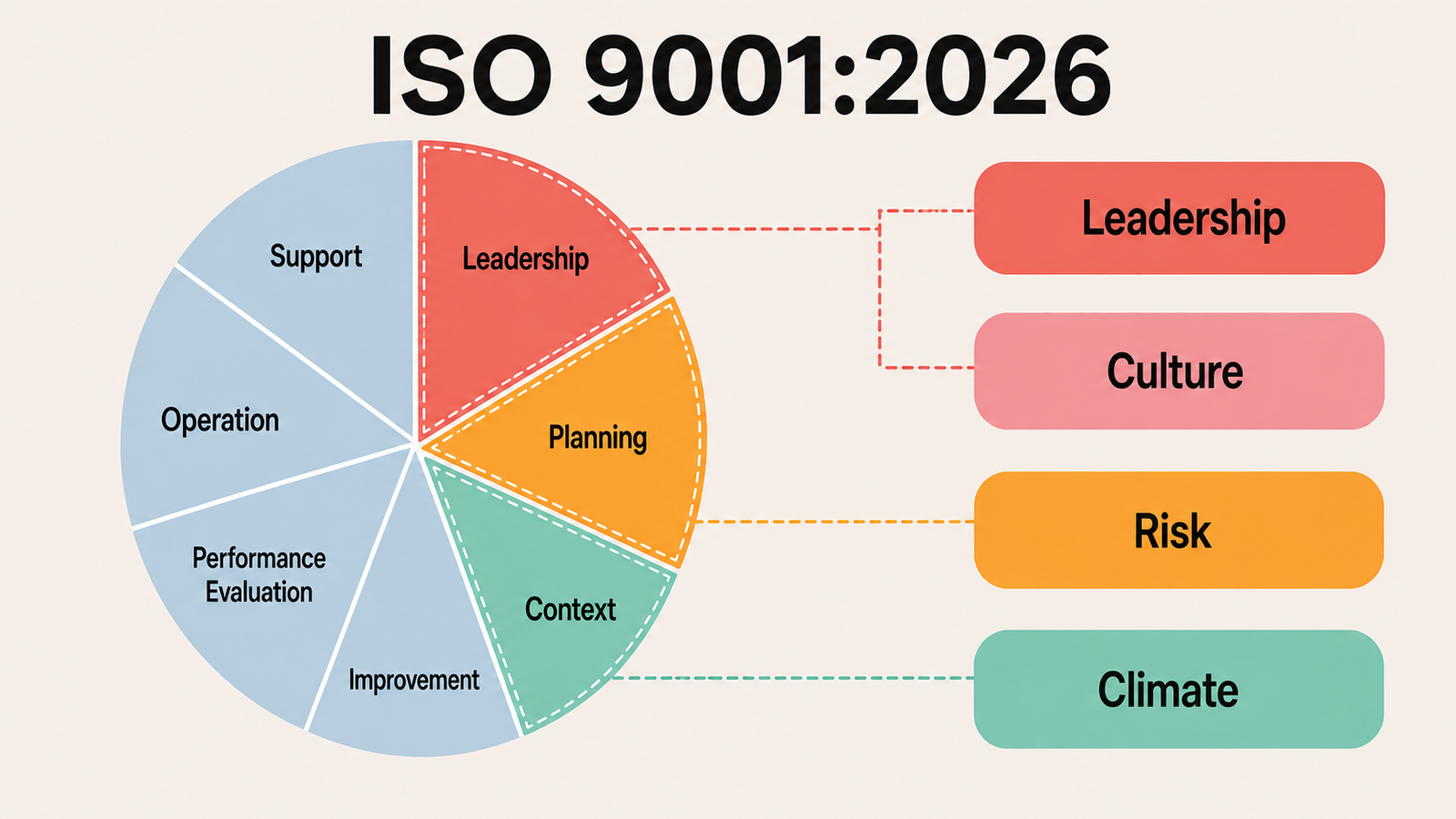
International standards create global trust. ISO 9001 is the quality management benchmark recognised across virtually every sector. ISO 22000 sets food safety management requirements. IEC 60601 covers safety and performance for medical electrical equipment. International certification does not replace local regulatory compliance — a company can be ISO 9001 certified and still fall short of a country’s specific product regulations. But for cross-border supply chains, international standards provide a shared reference that customers, regulators and partners recognise without needing to decode local variations.
The strategic blind spot
Most SMEs approach standards reactively. A customer asks for certification; the company scrambles to comply. That posture is costly and often too late.
Standards influence supply chain entry, export eligibility, tender qualification, customer audits and recurring quality disputes. They also do something less visible but equally important: they convert informal know-how into repeatable, verifiable capability. A company may be doing good work. But if its processes are inconsistent or undocumented, larger customers — particularly MNCs with procurement governance — will hesitate. Standards provide the common language that makes trust transferable across organisations.
This is particularly acute in manufacturing, medtech, food production, electronics, construction and sustainability-linked sectors. In these industries, buyers are not only purchasing a product — they are purchasing assurance.
Questions that turn standards into strategy
SMEs do not need to adopt every standard. That would be expensive and unnecessary. The goal is targeted clarity.
Before committing to any certification path, answer these five questions:
- What do my key customers require? Start with the standards your most important or aspirational customers already reference in contracts, audits or supplier manuals.
- What does my industry use as a common benchmark? The relevant industry association or sector body is usually the best starting point.
- What national regulations apply to my product? Identify where standards have been incorporated into law — not just as a compliance check, but to understand how tightly the two are linked.
- What do my target export markets expect? Regional and international standards are often the most direct path to credibility with overseas buyers.
- Which standards will improve how we actually operate? Quality, safety and productivity gains are a return on the investment in standards adoption — not just a badge for the sales pitch.
The floor and the benchmark
Regulations set the legal floor. Standards define the professional benchmark above that floor — and in competitive markets, the benchmark is often where the real decisions are made.
The companies that treat standards as a strategic input, rather than a compliance burden, are better positioned to influence requirements, qualify for larger supply chains, pass customer audits without friction and enter new markets with demonstrable credibility.
Standards look technical. They function as market access tools.
For Singapore’s SMEs, the opportunity is not simply to understand the difference between a standard and a regulation. It is to understand which standards are already shaping the markets they want to compete in — and to move before those standards become barriers instead of entry points.