The closure of FoodXervices is not just the end of a 92-year-old family business. It is also a reminder that growth, legacy and reputation do not always translate into resilience.
According to The Business Times, FoodXervices entered voluntary liquidation in April 2026 after years of pressure following the pandemic, a major property investment, customer closures, shrinking trade financing and failed revival plans. The company had completed a new S$50 million headquarters in Pandan Loop in January 2020, shortly before Covid-19 disrupted the F&B sector. (Source)
On paper, the investment seemed logical. FoodXervices had grown rapidly before the pandemic, with revenue reaching S$65 million for the financial year ended April 2020. Its new facility, Xpace, was meant to support logistics, central kitchens, storage and shared services for F&B operators. But when the pandemic hit, sales reportedly plunged sharply, leasing plans stalled, and the asset that was supposed to support the next phase of growth became a heavy financial burden.
This is where the story becomes bigger than one company.
Many SMEs are encouraged to scale, modernise and professionalise. They are told to invest in infrastructure, digital systems, talent, branding and productivity. These are not wrong moves. In fact, they are often necessary. But the FoodXervices case shows that timing, financing structure and industry exposure matter just as much as ambition.
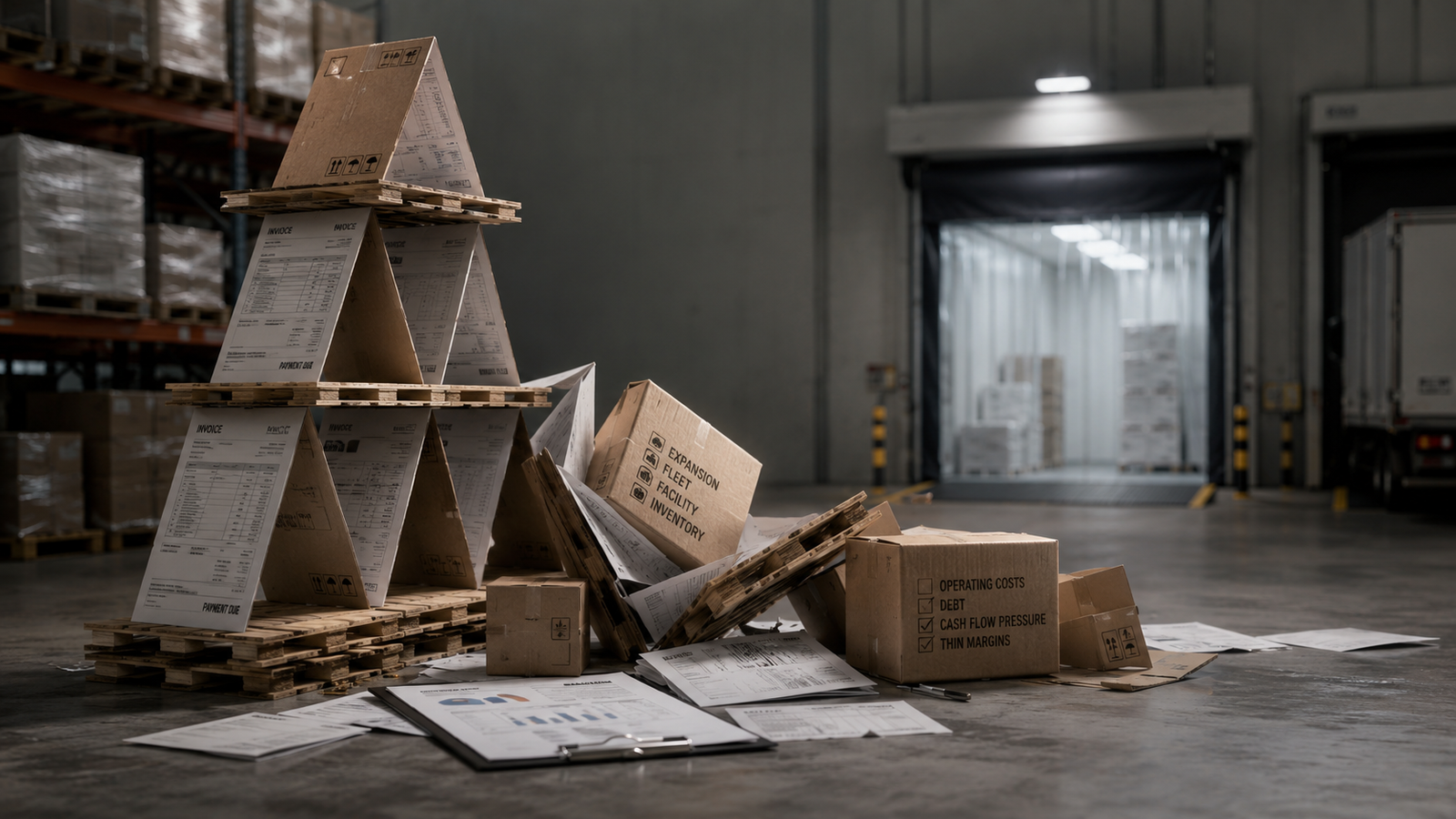
For asset-heavy businesses, growth can become dangerous when fixed costs rise faster than margins. A warehouse, factory, headquarters or fulfilment centre may improve capacity, but it also creates obligations that do not disappear when revenue falls. Rent, utilities, loan repayments, logistics costs and manpower expenses continue even when customers slow down or disappear.
The pressure is especially severe in the F&B supply chain. Suppliers often extend credit to restaurants, cafes and hotels, while needing to pay their own suppliers earlier. In the FoodXervices case, trade lines were described as critical to cash flow because distributors may give customers 90-day payment terms while having to pay suppliers within 30 days. When banks reduced or stopped these lines, the company’s ability to keep operating was severely affected.
Singapore’s F&B sector has also been facing wider churn. The Straits Times reported that ACRA figures showed 1,021 food businesses shut down between January and March 2026, compared with 1,047 that started up. Earlier, the Ministry of Trade and Industry said that from 1 January to 23 October 2025, there were 3,357 new retail food establishments and 2,431 closures. (Source)
That matters because a food distributor does not only depend on its own execution. It depends on the health of the entire ecosystem around it — restaurants, hotels, cafes, central kitchens, caterers, landlords, banks, logistics partners and suppliers. When customers close, delay payment or reduce orders, the distributor absorbs the shock.
FoodXervices’ story also challenges a romantic idea of family business legacy. Longevity is powerful, but it is not protection. A company can survive for decades and still be vulnerable to one badly timed expansion, one sector-wide disruption, or one collapse in financing support.
For second- and third-generation business owners, the lesson is uncomfortable but necessary: preserving a legacy does not always mean preserving the same business model. Sometimes the real legacy is not the company name, the building, or the old operating structure. It is the entrepreneurial capability to rebuild in a new form.
For Singapore SMEs, the bigger question is this: how should businesses scale without becoming too fragile?
The answer may lie in a more disciplined form of growth. SMEs need to look beyond revenue and ask harder questions about margins, debt, working capital, customer concentration, fixed-cost exposure and downside scenarios. They also need to stress-test expansion plans against shocks that may not appear in normal-year projections.
FoodXervices was not a weak brand. It was not a young, untested startup. It was a recognised name in Singapore’s food supply ecosystem. That is precisely why its closure deserves attention.
The lesson is not that SMEs should avoid ambition. The lesson is that ambition must be designed with resilience.
In today’s business climate, the strongest companies may not be the ones that grow the fastest. They may be the ones that know how much weight their business model can safely carry.